ABOUT

Irakorinde
Is Irakorinde your name?
Yes, Irakorinde is my name—my magician’s name, or ritual name—which does not appear in my passport. I have always felt more at ease using my magical name in mystical contexts.
On one hand, I come from China, and the consonant in my family name, X, is difficult for many to pronounce. On the other, I have used the name Irakorinde in ritual for many years, and it has become a true part of myself.
I would be pleased if you addressed me as Irakorinde in all messages. And if we are ever to share a ritual in future, I ask that you also call me by this name.
What does Irakorinde mean?
Irakorinde is drawn from Pritchard’s Witchcraft, Oracles and Magic Among the Azande, and signifies “possessor (ira) of bad (ko) teeth (rinde).”
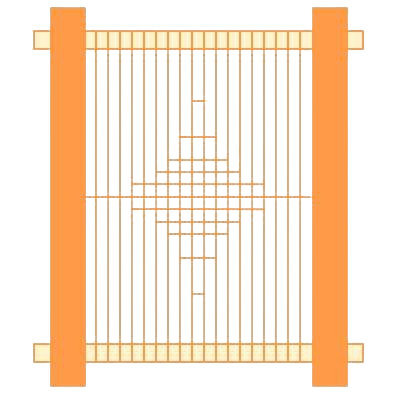
Yet, in the emblem, I chose to substitute ko (bad) with kere (good)—for I would rather be one with good teeth! Haha!
There is one unlucky agent, however, who bears so close a resemblance to witches that he must be described here. This is the person who cuts his upper teeth first. Such a man is called an irakorinde; ira, possessor of, ko (a contraction of kere), bad, and rinde, teeth. He is considered unlucky but not a serious menace, like witches, since he never kills people. I have not seen a person who was known to be a possessor of bad teeth; but then, as Azande ask, how can you know whether a man is one or not? Nevertheless, people say that it is sometimes known if a baby has shown upper teeth before lower ones, and I was told that such a child would be considered a danger to the crops of neighbours, and that if its evil influence were not counteracted by magic it would run a risk offalling a victim to protective medicines. They say of such a child: Oh, what a child to have his teeth appearing above. It is a witch. Oh protect my first-fruits lest that possessor of evil teeth goes to eat them.
Witchcraft, Oracles and Magic Among the Azande, Appendix III
Why did you choose Irakorinde as your magician name?
The name Irakorinde marks a beginning—my first crossing into the world of magic, or rather, into my world of magic.
I was not born with any remarkable spiritual gifts. For much of my childhood, philistinism clouded my mind, and my steps toward the spiritual were often halted by the plain mechanisms of formal logic. Though I could feel a quiet force within, ready to push through these barriers, skepticism held me back from every direction. At that time, academic study seemed the only possible gateway into the world of magic. Yet, as I came to learn, this is no true path—none completes their Great Work through social sciences alone.
The concept of Irakorinde offered me a small but steady light. Every child experiences the falling and replacement of teeth, and beliefs around this process appear in nearly every culture. I began to realize that the magical world of the Azande was not so distant, not unreachable—and slowly, I started to perceive the spiritual realm both around me and within.
Since then, teeth have held a sacred place in my practice and understanding. In my personal symbolism, they serve as a dual gem, bridging the mundane and the arcane; as the primal tool that renders nourishment into life-sustaining essence; and as the firm instrument through which sound becomes meaning. With the image of the tooth as my foundation, a once-philistine child slowly found her path—wherein the line between sound and language dissolved, the mechanics of change grew fluid, and the division between the material and the spiritual world faded into a unified whole.
What is Weaver’s Mysticism?
Weaver’s Mysticism can be understood quite simply through language. According to the Collins Dictionary, mysticism is a religious practice in which people seek truth, knowledge, and closeness to God through meditation and prayer. Also from Collins, “if you weave cloth or a carpet, you make it by crossing threads over and under each other using a frame or machine called a loom.”
In this vision, Weaver’s Mysticism offers a mystical path where the seeker may, and indeed ought to, weave their own journey—thread by thread—within a supportive structure. It is a path that affirms the possibility of personal creation rather than blind adherence to inherited forms. Yet it does not proclaim boundless freedom; practical wisdom reminds us that a framework is necessary, as not all threads are equal, nor do all patterns hold.
The Spindle Path reflects my own understanding and experience within mystical practice, but it is not the only thread in the loom. Under the greater canopy of Weaver’s Mysticism, other paths may be woven—and must be, if the fabric is to live.
What is the Spindle Path?
The Spindle Path is one of the paths within Weaver’s Mysticism. It offers only a few simple principles and warnings, leaving a wide space for individual design and experimentation.
Yet it calls upon the practitioner to remain soberly mindful—of their origin, their present station, and the steps by which their attainments have come to be.
To follow the Spindle Path is to create one’s own way. This path is not fixed in advance, but woven through personal effort and reflection. Although it is individual, it can be shared with others and discussed openly with fellow practitioners.
Summarizing and sharing are important aspects of the Spindle Path. Like weaving, where the weaver eventually holds a finished fabric to show, a practitioner of the Spindle Path will eventually have a path—not merely a personal collection—to present and share.
Why Weaver’s Mysticism and the Spindle Path?
In truth, I am not one who ever sought to carve out a personal path, nor did I carry any ambition to establish an Order or similar construct. The proposal of Weaver’s Mysticism and the Spindle Path arises entirely from practical and realistic concerns.
Firstly, we—myself, and I believe many other practitioners—dwell in a world marked by movement and mingling. The teachings of many faiths, traditions, and cultures reach us with ease. Globalization dissolves boundaries; modernization casts new light upon ancient ways. I do not wish to wander endlessly among pre-made paths, nor to collect them like relics. I have but one life—my own. Learning from others is necessary and enriching, but following a fixed doctrine is another matter. I also don’t believe I can teach others how to live their lives or how to reach their god(s). Thus arose the impulse to propose a mode of practice rooted more in the individual.
Second, personal experience—especially mystical experience—holds value beyond the personal. I, and I believe most practitioners, have benefited from the experiences of others—often from great magicians, mystics, and even scholars. But we can also learn from our peers. From my own reflections, I find that intentional review of my progress often yields something worth sharing. In turn, I learn from the honest paths of others. This is why Weaver’s Mysticism and the Spindle Path place emphasis on the systematic articulation of one’s development. The purpose is not merely to “find oneself” or discover a mission, but to render one’s journey of value to others as well.
Third—and perhaps most importantly—I (and perhaps not most practitioners this time) have come to realize that mysticism holds enormous potential to respond to the challenges of the contemporary world. Unlike the discourses of academia, the bargains of economy, or the shifting tales of politics, mystical practice asks of the human being the formation of sound habits—habits which may lay a firm and enduring foundation for one’s engagement with the ever-turning world. This is why I bring modernization and globalization directly into the concerns of mysticism. Whatever future awaits, mysticism cannot retreat into seclusion—it must gather the many threads now available. In doing so, Weaver’s Mysticism and the Spindle Path aim to help practitioners find not only their way, but their ground.
How long does the Spindle Path take?
The Spindle Path is not a system of degrees, but a framework of practice. One might imagine it as the weaving of a fabric—the time it takes depends upon the pattern, the method, and the rhythm of the weaver.
Yet all who walk this path are encouraged to hold in mind a reasonable span of time in which their weaving might come to completion.
How to know about Weaver’s Mysticism and Spindle Path?
I will continue writing blog posts on the topic.
There is also a course available in Chinese, which I plan to translate into English soon. However, I do not recommend purchasing the course without first reading some of my freely available content.
For Chinese readers—especially those who know me from BiliBili—feel free to purchase the course now if you’re interested.